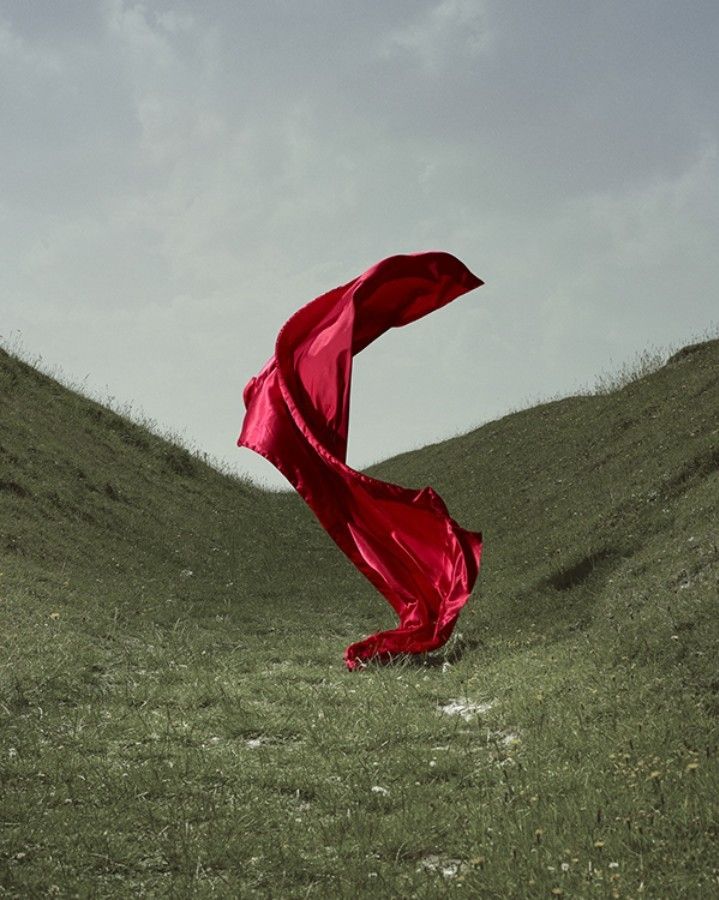
Red
Red was your first home. And some part of you has never forgotten.
Arushi Mishra
Think back to the very first moment you understood colour. Perhaps it was a teacher holding up a chart, or a box of crayons sliding across a desk. Red was probably the first one you reached for- bold, unmistakable, impossible to ignore. And without knowing it, you were also handed its meaning. Red means stop. Red means danger. Red means anger. But also, red means love.
From the moment we enter school, we are taught to associate colours with emotions. It is one of the earliest lessons in emotional literacy. And red, perhaps more than any other colour, carries the heaviest emotional load by sitting at two seemingly opposite ends of the human experience. On one end: fury, alarm, and warning. On the other: desire, passion, and love. It is the colour of a traffic light telling you to halt, and the colour of a heart telling you to feel.
What is curious, however, is that we were handed these associations from the outside. Someone told us what red meant. A textbook, a teacher, a culture. But before any of that before the classroom, before the crayon box, before the first word you ever spoke, you already knew red. You just didn't know you knew it.
Before the World Showed You Red, Red Made You
Here is a truth that rarely makes it into poetry or philosophy, but perhaps it should: the first environment you ever existed in was red. Inside your mother's womb, the world was not black, not white, not a gentle blue. It was red. Warm, enveloping, alive.
The walls of the womb, lit faintly by light filtering through skin and tissue, cast everything in deep, pulsing red. It was the first landscape you ever knew.
So it wasn't just a backdrop. Red — in the form of blood, of oxygen, of iron rushing through vessels, was the very mechanism of your becoming. Every organ that formed, every cell that divided, every heartbeat that kept the process going, was carried and sustained by the colour red. It was not symbolic then. It was biological. It was everything.
The Colour That Contains Contradictions
What makes red endlessly fascinating is that it refuses to be one thing. Every other colour seems to settle into a lane. Blue is calm, green is growth, and yellow is warmth. But red insists on holding opposites simultaneously, and it does so without apology.
Red is the colour of the blood that wounds and the blood that heals. It is the colour of the fire that destroys and the fire that warms. It is worn by brides in India as a symbol of new beginnings and by matadors in Spain as a provocation of danger. It decorates places of worship and it marks zones of war. It is on the lips of someone being kissed and on the hands of someone who has caused harm.
This duality is not a contradiction. It is, in fact, red's greatest truth: that the most powerful forces in human life are never clean or simple. Love and anger are closer than we admit. Passion and destruction share a heartbeat. Red knows this. Red has always known this.
Why Is Red Different?
Science has a few things to say about why red commands attention the way it does. Of all the colours visible to the human eye, red has the longest wavelength. Red increases heart rate, heightens alertness, and even stimulates appetite. It is not a passive colour. It acts on the body.
This is perhaps why it was the first colour that ancient humans learned to produce in pigment. Cave paintings, thousands of years old, used red ochre-- one of the earliest known uses of colour by our species. Long before we had language for it, we were drawn to it. Long before we could name what it made us feel, we used it to communicate.
The next time you see red, on a traffic light, on a rose, on a screen- pause for just a moment. Before the meaning you were taught kicks in, before the association arrives, notice what the body does first. Notice the slight quickening. The heightened presence. The sense that something real is happening.
That is not fear. That is not anger. That is recognition.
Red was your first home. And some part of you has never forgotten.