4 Gunshots that Altered 7 Lives
Red was the colour of the night before 15 November 1952; Red was the colour that entered Kansas City on the morning of 15 November 1952
Shreya Saksena
Truman Capote was a 35-year-old young man when an article buried deep inside the pages of The New York Times caught his eye.
He packed his bags, accompanied by his good friend and eventual Pulitzer Prize winner Harper Lee, and left for Holcomb, Kansas. It was the site of the horrid and mysterious murder of four members of the Clutter family, a crime that had gripped the United States.
Capote spent six years of his life documenting the Clutter case as it unfolded. The outcome of his trip was In Cold Blood, first published as a series in 1965 and later as a novel in 1966.
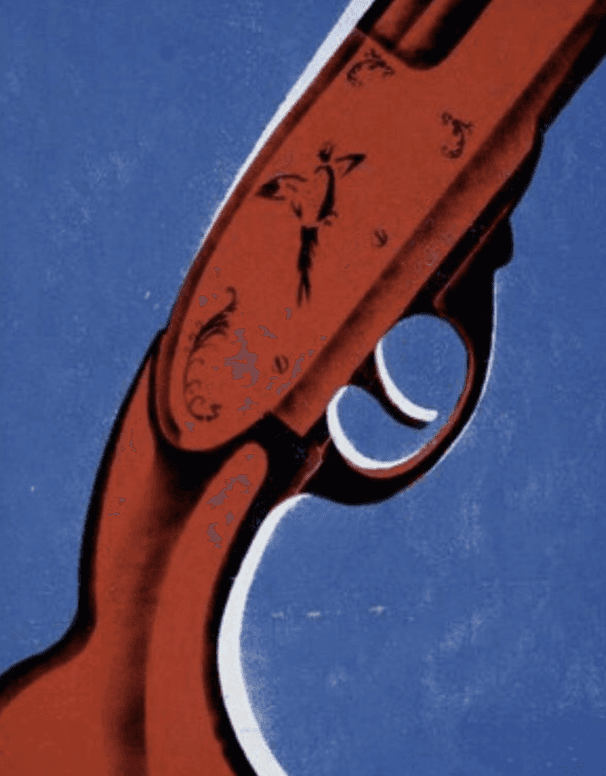
In Cold Blood is an enthralling journalistic novel. It traces the events leading up to and following 15 November 1959. That night, four gunshots claimed more than four lives. Four innocent lives were lost, and the futures of the two murderers were sealed. These were murders without substantive motive, committed quite literally in cold blood.
Written in minute detail and structured through a triple narrative — criminals, investigators, and townspeople — the book is divided into four evocative chapters.
The Clutters’
The first chapter, titled “The Last to See Them Alive,” includes testimonies from friends, neighbours, and town residents who knew the family intimately. It brings to life the sleepy town of Holcomb and humanises the four victims: Herbert Clutter, devoted husband and respected farmer; Bonnie Clutter, timid yet loving mother; Nancy Clutter, sixteen, the town darling; and Kenyon Clutter, intelligent and withdrawn.
Capote lingers over ordinary details. He shows us routines, conversations, small concerns about the future. By doing so, he makes the tragedy that follows feel even more stark.
The narrative then shifts between Holcomb and Little Olathe, where Perry Smith and Richard Hickock hatch a plan to make “the perfect score.” Though the relation between the two storylines is never explicitly stated, it is understood. Capote’s writing keeps readers anxious, waiting for the inevitable intersection.
A Red Disruption
The second chapter, “Persons Unknown,” captures a town transformed. Suspicion replaces familiarity. Old friends look at one another differently.
Capote also devotes significant space to Perry Smith’s troubled childhood — unstable parents, a cruel orphanage, repeated rejection. While this does not excuse the crime, it complicates the reader’s response.
One begins to see the killers not as monsters, but as damaged and deeply flawed men.
Many argue that Capote saw himself in Perry. His empathy for him is visible in the narration. This emotional layering is one of the most unsettling aspects of the book. The grief of the victims sits alongside the fractured lives of the perpetrators.
Perry & Dick
In “Answer,” loose ends begin to tie together. Floyd Wells, an old cellmate of Dick’s, comes forward and reveals the origins of the plan. The arrest in Las Vegas provides narrative closure, but not emotional relief.
The final chapter, “The Corner,” moves into the courtroom and eventually to the Kansas State Penitentiary, where Perry and Dick are hanged in 1965. Capote details the proceedings, evaluations, and the application of the M’Naghten Law with careful restraint.
There is no dramatic moralising, only documentation
So, should you read it?
What makes In Cold Blood particularly striking is its attention to detail. Capote reconstructs the days leading up to the murders and the years that follow with precision. This immersive style draws readers into the atmosphere of the town and leaves them slightly disturbed.
The novel also raises difficult questions. By emphasising the lives of the criminals, does Capote draw attention away from the Clutters? Critics have argued that the book immortalised the killers as much as, if not more than, the victims.
The Guardian wrote in a critique of the book in 2009, “But many in the town continue to resent its (the book's) intrusion, and refuse to talk about it or any of the subsequent films. Cliff Hope puts the ongoing hostility down to Capote's unblinking portrayal of the killers. "Many people thought he should have written about the Clutter family, rather than the murderers."
Bobby Rupp also told The Guardian that he thought Capote had been unfair to the Clutters, for his work
put a blot on their memories – he believes that the Clutters ' wonderful lives had been eclipsed by the story of their gruesome deaths.
This moral tension lingers long after the book ends.
Despite the controversies, In Cold Blood remains widely read more than sixty years later. It is not just a true crime narrative but a study of loss, memory, and the fragility of ordinary life.
As another year passes, dust will gather over the Clutters' tombstones in Valley View. Loved ones will visit them and place fresh flowers over the wilted ones. The tragedy will be remembered again on 15 November and then get lost in history.
The sleepy town of Holcomb will go unnoticed by many. Then, someone somewhere will pick up In Cold Blood, become part of the town, share in its loss, and, in this manner, the town, its people, and their grief will become immortalised.