Delhi’s Red Problem
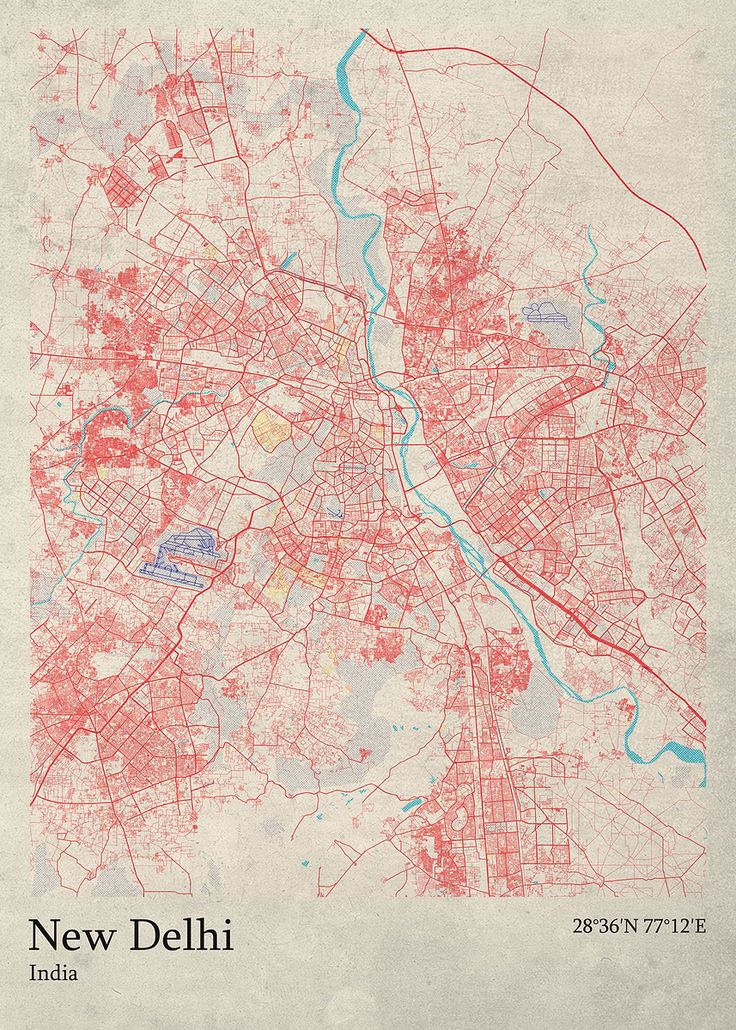
A thread of red has run through Delhi’s destiny for over a century. Since it became the imperial capital, and even more so after Independence, the city has been shaped by plans marked by precision and ambition. Yet beneath these grand designs lies another map, drawn not in blueprints but in red ink.
Team Fitoor Magazine
A thread of red has run through Delhi’s destiny for over a century. Since it became the imperial capital, and even more so after Independence, the city has been shaped by plans marked by precision and ambition. Yet beneath these grand designs lies another map, drawn not in blueprints but in red ink. The Lal Dora, a colonial-era boundary created by the British for administrative convenience, has endured through shifting regimes to shape how the capital functions even today.
Introduced in 1908, the Lal Dora demarcated abadi areas, the inhabited cores of village settlements, where residents could build homes without the permits and taxes associated with agricultural land. It was, in many ways, a pragmatic arrangement. Rural settlements were allowed to grow organically, free from bureaucratic constraints. For decades, this system functioned within a largely agrarian landscape.
The turning point came when Delhi became the capital of independent India, and rapid urbanisation followed. As agencies such as the Delhi Development Authority (DDA) acquired vast tracts of land to construct a modern city, Lal Dora lands were largely left untouched. These areas came to be classified as “urban villages”, an oxymoronic term that described pockets within an expanding metropolis that seemed suspended in time and administrative ambiguity. Places like Mehrauli and Shahpur Jat became islands of relative autonomy within an increasingly planned city.
What emerged was not chaos in the conventional sense, but something more layered, a form of institutionalised informality. Freed from strict building by-laws, Lal Dora areas adapted swiftly to the pressures of urban growth. Homes expanded vertically, often without structural oversight. Former agricultural households became landlords, renting rooms to migrants, students, and workers who sustain Delhi’s economy. In places such as Hauz Khas Village, this flexibility even enabled a striking transformation into hubs of art, nightlife, and design.
Yet this adaptability has come at a cost. Streets once meant for bullock carts now struggle under the weight of cars and delivery traffic. Basic infrastructure, such as sewage drainage, and fire access has lagged behind. The absence of clear legal frameworks has also complicated redevelopment efforts, leaving these neighbourhoods caught between informality and regulation.
To a newcomer, Delhi’s stark inequalities are immediately visible. Glossy, upmarket enclaves often sit alongside dense, under-serviced neighbourhoods in urgent need of planned development. It would, however, be simplistic to blame Lal Dora alone for these disparities. The deeper issue lies in the failure of successive master plans to anticipate the scale of migration and the city’s housing demands.
Still, the persistence of this colonial-era red boundary raises an important question. Why has it remained so firmly etched into Delhi’s urban fabric, even as so much else has changed? Would its removal disempower the residents of these areas, or could it enable more equitable and planned growth? And is erasure even possible?
There is also the curious question of colour. Why red? Why not blue, black, or pink? In a city increasingly defined by shades of grey, its skies thick with pollution, it is striking that at the heart of many of its urban challenges lies a line drawn in red, the enduring imprint of the Lal Dora